Child development assessment Sitla 2026
26 Feb 2026, 7:27 AM IST
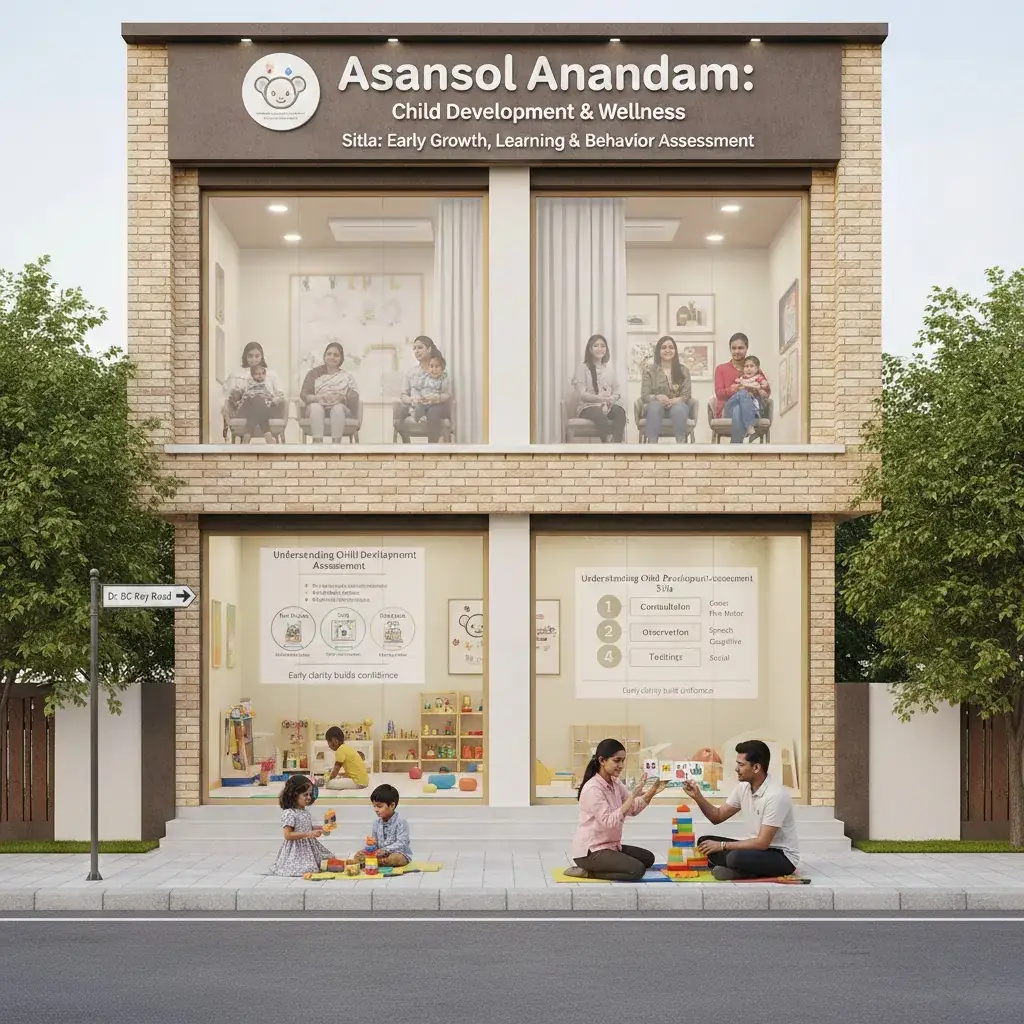
Child development assessment Sitla helps parents understand growth, learning, and behavior patterns early. At Asansol Anandam in Dr. BC Roy Road, Sitla, Asansol, structured milestone evaluation at Sitla identifies delays, strengths, and support needs. Scientific tools, observation, and expert guidance ensure accurate results and practical action plans for every child.Every child grows differently. The right evaluation makes the difference.
How is child development assessment done in Sitla?
Child development assessment Sitla is done through structured screening, observation, standardized tests, and parent interaction sessions. Professionals evaluate physical, cognitive, speech, social, and emotional development. In Sitla, milestone evaluation at Sitla includes age-specific checklists, behavioral analysis, and detailed reporting, followed by personalized guidance for therapy, learning support, or developmental monitoring.Understanding Child Development Assessment Sitla at Asansol Anandam
For families seeking reliable support, child development assessment Sitla at Asansol Anandam, located on Dr. BC Roy Road, Sitla, Asansol, offers structured and research-based evaluation. As an organization dedicated to developmental care, we focus on early identification. Delays are easier to manage when detected on time. Assessment begins with detailed case history. Parents share pregnancy details, early milestones, behavior patterns, and academic concerns. Then comes observation. Not rushed. Not mechanical. The child is engaged in play-based interaction. Speech clarity, motor skills, attention span, and social response are carefully noted. Standardized tools are used for milestone evaluation at Sitla to compare age-appropriate development benchmarks. This includes language scale checks, cognitive ability testing, and behavioral screening. Results are documented clearly. No confusing medical jargon. After evaluation, a structured report is shared. It highlights strengths first. Then areas that need improvement. If required, therapy plans are recommended. Sometimes only monitoring is needed. Sometimes speech therapy, occupational therapy, or behavioral intervention is suggested. Follow-up sessions track improvement. Child development assessment Sitla here is not just testing. It is guidance. It is reassurance. It is clarity for parents who feel unsure about their child’s growth pattern.Milestone Evaluation Sitla – What Gets Checked?
1) Developmental Domains Covered
Milestone evaluation Sitla checks:- Gross motor skills – walking, jumping, balance
- Fine motor skills – writing grip, hand control
- Speech and language – vocabulary, clarity
- Cognitive skills – memory, problem-solving
- Social behavior – eye contact, interaction
2) When Assessment is Recommended
Parents are advised to consider child development assessment Sitla if:- Speech delay is noticeable
- Learning difficulty appears in school
- Behavioral issues increase
- Social interaction feels limited
- Milestones seem delayed compared to peers
Assessment Process Overview
Below is a simple breakdown of how the evaluation usually progresses:| Stage | What Happens | Why It Matters |
|---|---|---|
| Initial Consultation | Parent discussion and concern mapping | Identifies background factors |
| Observation Session | Play-based interaction with child | Reveals natural behavior patterns |
| Standardized Testing | Age-based developmental tools | Measures milestone accuracy |
| Report & Guidance | Detailed explanation and next steps | Clear action plan for parents |
| Follow-Up | Monitoring or therapy referral | Ensures measurable improvement |