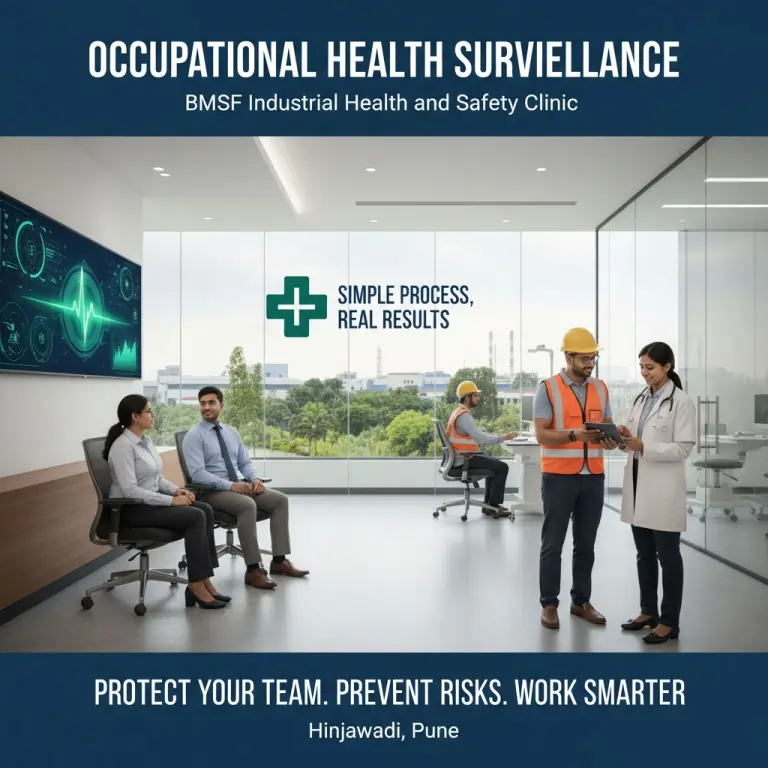
Occupational Health Surveillance
Service Details
The purpose of occupational health surveillance is to systematically monitor workers' health through ongoing data collection, analysis, and interpretation. This helps detect early signs of work-related issues, identify harmful exposures, evaluate control measures, and prevent injuries, illnesses, or long-term conditions before they become serious. Ultimately, it protects employee well-being, ensures workplace safety compliance, and supports healthier, more productive teams.
What is the purpose of occupational health surveillance?
Occupational health surveillance serves as a proactive safeguard in modern workplaces, especially in fast-paced areas like Hinjawadi's IT parks and industrial zones. At its core, it involves regularly tracking employees' health to spot potential problems tied to job hazards—think repetitive strain from desk work, exposure to chemicals in manufacturing, or noise in production lines—long before they turn into chronic issues.
The main goals include:
- Early detection of health changes that could signal overexposure to risks.
- Confirming that safety controls (like ventilation, PPE, or ergonomic setups) are actually working.
- Gathering data to guide better prevention strategies and reduce absenteeism or claims.
- Helping employers meet legal requirements under Indian factories act and other regulations while building a culture of care.
In places like Pune's thriving industrial hubs, we've seen how regular occupational health monitoring catches subtle trends—such as rising fatigue or minor respiratory complaints—and allows quick adjustments that keep teams thriving rather than just surviving.
At BMSF Industrial Health and Safety Clinic in Hinjawadi, Pune, we make occupational health surveillance straightforward and effective for corporate, IT, and industrial clients. Our programs combine medical screenings, trend analysis, and practical recommendations tailored to your workforce.
Why Occupational Health Monitoring Matters in Today's Workplaces
Imagine a software engineer in Hinjawadi spending long hours at a desk—without proper monitoring, eye strain or back issues can build quietly. Or factory workers handling materials; small exposures add up if not watched. Occupational health surveillance flips that by providing real insights from periodic check-ups, lung function tests, audiometry, or blood work where relevant.
This isn't just about ticking compliance boxes. It's about real people: reducing sick days, boosting morale, and avoiding costly disruptions. Many of our clients in Pune's IT and manufacturing sectors start with basic occupational health monitoring and quickly see benefits like fewer injuries and stronger employee trust.
Key Components of Effective Occupational Health Surveillance
Here's what a solid program typically covers:
| Component | Description | Typical Frequency | Benefits for Employers & Employees |
|---|---|---|---|
| Baseline Health Assessment | Initial check-up (pre-employment or upon joining high-risk roles) | At onboarding | Establishes normal health status |
| Periodic Medical Exams | Ongoing screenings like vision, hearing, spirometry, or general vitals | Annually or as per risk | Detects early changes |
| Exposure-Specific Tests | Targeted for hazards (e.g., audiometry for noise, blood tests for chemicals) | Risk-based (6-12 months) | Confirms controls are effective |
| Data Analysis & Reporting | Trend review across workforce | Quarterly/Annually | Informs safety improvements |
| Follow-Up & Interventions | Referrals, adjustments, or training based on findings | As needed | Prevents escalation |
This table outlines a practical framework we adapt at BMSF for Hinjawadi businesses.
Bringing It All Together for Your Team
Running occupational health surveillance doesn't have to be complicated. We focus on making it fit your schedule—whether onsite camps in Hinjawadi or clinic visits—with clear reports that help HR and safety teams act fast. The result? Healthier workers, fewer risks, and a workplace everyone feels good about.
FAQs
What exactly does occupational health surveillance involve?It includes regular health check-ups, data tracking, and analysis to spot work-related health risks early and prevent them.
Is occupational health monitoring mandatory in India?
Yes, for many industries under the Factories Act and other rules—especially where hazards exist. It helps with compliance and shows commitment to employee safety.
How often should occupational health surveillance be done?
It depends on risks: annually for most, more frequently for high-exposure roles. We customize plans based on your industry.
What's the difference between occupational health surveillance and regular medical check-ups?
Surveillance is workplace-focused—it tracks trends linked to job hazards, not just general health.
Can small IT companies in Hinjawadi benefit from this?
Absolutely. Even desk-based roles face ergonomic or stress risks; monitoring helps catch issues early and supports wellness.
How do I start occupational health surveillance at my workplace?
Reach out to us at BMSF—we'll assess your needs, set up screenings, and provide ongoing support tailored to Pune's industrial scene.