Trusted 5 inverter battery safety tips in new link road 2026
22 Apr 2026, 6:49 PM IST
Battery safety depends on proper installation, controlled charging, ventilation, and routine inspection. Inverter systems require careful handling to avoid overheating, acid leakage, and short circuits. Following structured safety practices and expert guidance helps extend battery life and ensures stable backup power for homes and offices without unexpected failures or risks. Battery safety becomes critical when power backup systems run daily in homes and small businesses around Mitha Nagar, Goregaon West.
Safe battery handling is not complicated, but it needs discipline, awareness, and the right guidance from experienced professionals like Bombay Batteries.
We provide structured guidance through this resource on inverter battery safety tips local to help users avoid risks and improve long-term performance of their inverter systems.
how to maintain battery safety?
Battery safety can be maintained by following proper installation, avoiding overcharging, ensuring ventilation, and performing regular maintenance checks. A battery safety guide also includes monitoring water levels in lead-acid batteries, keeping terminals clean, and preventing overload on the inverter system. Safe handling reduces fire risks, leakage issues, and sudden breakdowns while improving battery lifespan and efficiency.Battery-safety guide for inverter systems at home and offices
A strong battery-safety guide ensures that inverter systems operate smoothly without risk of damage or accidents, especially in busy residential and commercial setups like those in New Link Road, Mitha Nagar; inverter-battery safety tips local practices focus on correct installation, proper airflow, and load management because batteries generate heat during charging cycles, and if not controlled, that heat can reduce performance and create hazards; at Bombay Batteries, safety begins with choosing the right battery capacity, matching inverter load requirements, and ensuring stable wiring connections so that the system runs efficiently without sudden voltage drops or overheating issues.Why inverter battery safety matters in daily usage
Inverter batteries work continuously during power cuts, and even minor negligence can lead to performance loss or safety risks, which is why a structured battery-safety guide is essential; daily usage involves repeated charging cycles, and without monitoring, it may lead to sulphation, reduced backup time, or leakage problems, so following inverter battery safety tips local standards helps ensure stable energy backup, especially in homes where appliances like fans, lights, and Wi-Fi routers depend on uninterrupted power supply.Inverter battery safety tips local installation and handling practices
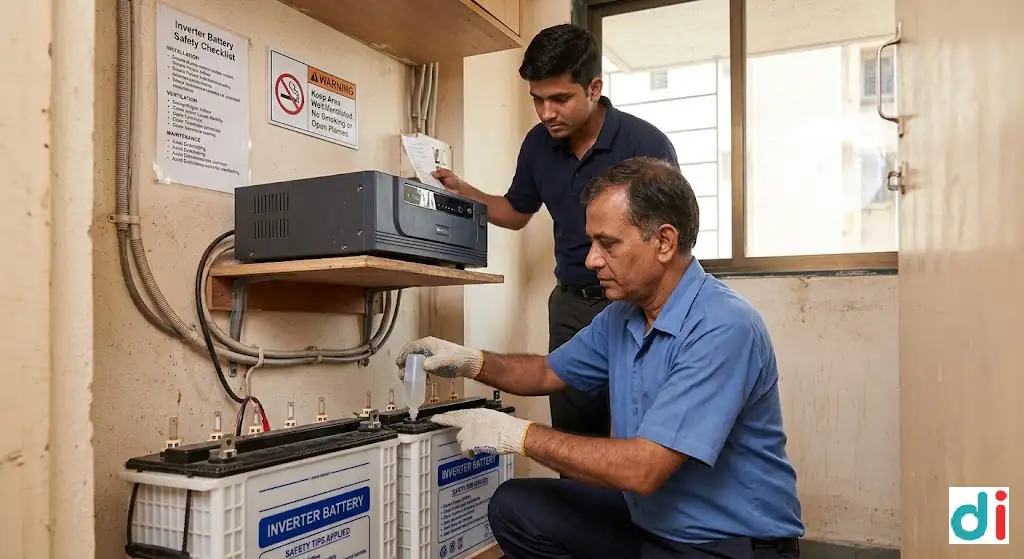
Proper installation is the foundation of long-lasting battery performance, and inverter battery safety tips local practices emphasize correct placement, cable tightening, and ventilation space; Bombay Batteries ensures every setup in Goregaon West is installed with clear airflow around the battery unit, because trapped heat reduces efficiency and increases wear; correct polarity connection, insulated wiring, and stable mounting are also essential steps, as improper handling can lead to short circuits or inverter failure, especially during heavy load usage in offices and apartments.Installation checks by Bombay Batteries
Every installation carried out by Bombay Batteries includes a detailed inspection of voltage compatibility, inverter load matching, and grounding safety; this battery-safety guide approach ensures users avoid common mistakes such as overloading circuits or placing batteries in closed cabinets, which often leads to overheating and performance drops over time.Daily maintenance practices for inverter battery safety tips local usage
Routine care is essential for keeping batteries efficient, and inverter battery safety tips local maintenance routines include checking electrolyte levels in lead-acid batteries, cleaning terminals to prevent corrosion, and ensuring proper charging cycles without deep discharge; a consistent battery safety guide also recommends avoiding frequent power overuse, as draining batteries completely can shorten their life; at Bombay Batteries, users are guided to schedule monthly inspections so small issues like loose terminals or slow charging can be detected early before they become major failures.Common mistakes affecting inverter battery safety tips local systems
Many battery issues arise from avoidable mistakes that reduce efficiency and safety; the most common errors include 1) overcharging the battery by leaving the inverter on unstable settings, 2) placing the battery in hot or poorly ventilated areas, 3) ignoring regular maintenance checks, and 4) using mismatched inverters and batteries; following a proper battery safety guide prevents these issues and ensures stable backup power, especially in areas like Mitha Nagar where seasonal load fluctuations are common due to frequent power cuts and appliance usage spikes.Inverter Battery Safety Checklist and Service Guide
| Safety Factor | Recommended Practice | Risk if Ignored | Maintenance Frequency |
|---|---|---|---|
| Installation | Proper wiring & ventilation | Short circuit, overheating | One-time setup check |
| Charging cycle | Controlled charging limits | Battery damage, swelling | Weekly monitoring |
| Terminal cleaning | Remove corrosion buildup | Power loss, poor connection | Monthly |
| Water level check | Maintain optimal electrolyte | Reduced backup time | Monthly |
| Load management | Avoid overload usage | System failure | Daily usage check |
| Inspection | Professional servicing | Sudden breakdown | Quarterly |