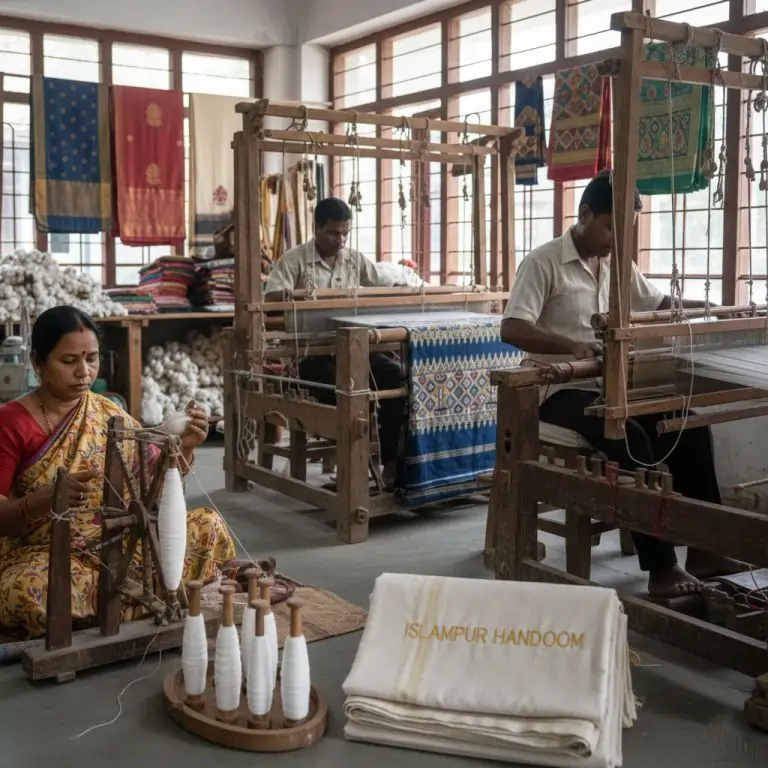
Handloom infrastructure in Chak Islampur is supported through community-driven initiatives, shared loom facilities, raw material access, and hands-on technical guidance. The Chak Islampur Khadi Cluster strengthens local weavers by offering loom setup support, maintenance help, and training—making traditional weaving not just survive, but actually earn a living again.
How is handloom infrastructure supported in Chak Islampur?
Handloom infrastructure support near Chak Islampur is not some distant government promise—it’s happening on the ground, in real homes, dusty courtyards, and small weaving units where threads still carry stories.
The Chak Islampur Khadi Cluster, an organization rooted in Chak Islampur, Murshidabad, works closely with artisans to make sure weaving isn’t stuck in the past but isn’t lost either. It bridges that fragile gap—between tradition and survival.
Real Support, Not Just Talk
Let’s be honest. A loom alone doesn’t build a livelihood. It needs space, materials, skill, and constant care. That’s where Chak Islampur Khadi Cluster steps in—with practical, no-nonsense solutions.
Right at the start, if you’re looking for handloom infrastructure support near Chak Islampur, this cluster becomes the anchor point.
They don’t just “support”—they show up, guide, fix, and build alongside artisans.
What Handloom Infrastructure Support Actually Looks Like
1) Loom Setup Support (Where It All Begins)
New weavers often don’t know where to begin. Even experienced artisans struggle with outdated setups.
Here’s where loom setup support changes everything:
-
Guidance on selecting the right loom type (frame loom, pit loom, etc.)
-
Help with installation—because one wrong alignment ruins fabric quality
-
Space optimization for small homes or shared units
-
Ensuring proper lighting and ventilation (often ignored, but critical)
It’s not glamorous work. But it’s the foundation.
2) Shared Infrastructure (Because Not Everyone Can Afford a Loom)
Let’s be real—looms cost money. Maintenance costs more.
So instead of leaving artisans stranded, handloom infrastructure support near Chak Islampur includes shared weaving spaces.
-
Common workspaces with multiple looms
-
Access to spinning and dyeing units
-
Reduced cost burden for beginners
-
Community-based production systems
It feels old-school. Like how things used to be. And honestly? That’s the beauty of it.
3) Raw Material Access (The Silent Backbone)
A loom without thread is just wood and iron.
The cluster ensures:
-
Steady supply of cotton, silk, and muslin yarn
-
Quality control (no cheap substitutes that ruin output)
-
Bulk procurement to reduce costs
-
Access to natural dyes and eco-friendly materials
This is where handloom infrastructure support near Chak Islampur quietly does its most important job.
4) Maintenance & Repair Support
Machines break. Always. Especially in rural setups.
Instead of forcing artisans to stop work, the cluster provides:
-
Regular loom inspection
-
On-call repair support
-
Replacement parts access
-
Training artisans to fix minor issues themselves
That last one? Game changer.
5) Skill + Infrastructure = Real Impact
Infrastructure alone is useless without skill.
So the support system blends both:
-
Training on modern weaving techniques
-
Quality improvement workshops
-
Productivity enhancement methods
-
Design updates without losing tradition
This is where loom setup support evolves into something bigger—confidence.
Quick Snapshot: What You Get
| Support Area | What’s Provided | Who Benefits Most |
|---|---|---|
| Loom Setup Support | Installation, alignment, workspace setup | New & upgrading weavers |
| Shared Infrastructure | Common looms, dyeing units | Low-income artisans |
| Raw Material Access | Yarn, dyes, bulk supply | All weavers |
| Maintenance Support | Repairs, spare parts, training | Active loom users |
| Skill Development | Training, productivity tips | Beginners & experienced alike |
Why This Matters (Beyond Just Business)
Let’s zoom out for a second.
Handloom isn’t just fabric—it’s identity. It’s slow work in a fast world. And without handloom infrastructure support near Chak Islampur, it would fade quietly.
But here’s the shift:
-
Women are earning from home-based looms
-
Younger generations are reconsidering weaving
-
Local economy gets a steady push
-
Traditional crafts stay alive—but not frozen in time
It’s not perfect. But it’s real. And that counts.
FAQs
1) How is handloom infrastructure supported in Chak Islampur?
Through community-based initiatives like the Chak Islampur Khadi Cluster, which provides loom setup support, shared workspaces, raw materials, and repair services to local artisans.
2) What does loom setup support include?
Loom setup support includes installation, alignment, workspace planning, and guidance on choosing the right loom type for efficient weaving.
3) Can beginners access handloom infrastructure support near Chak Islampur?
Yes, beginners can access shared looms, training programs, and loom setup support to start weaving without heavy upfront investment.
4) Is maintenance support available for looms?
Yes, artisans receive repair assistance, spare parts access, and basic training to maintain their looms independently.
5) How does loom setup support help artisans earn more?
Proper setup improves fabric quality, reduces errors, increases speed, and ultimately helps artisans produce more sellable products.
6) Are raw materials included in handloom infrastructure support near Chak Islampur?
Yes, yarn supply, dyeing resources, and bulk purchasing options are part of the support system to ensure consistent production.
There’s something quietly powerful about this whole system. No big noise. No flashy promises. Just looms being set, threads being pulled, lives being stitched back together—one fabric at a time.