
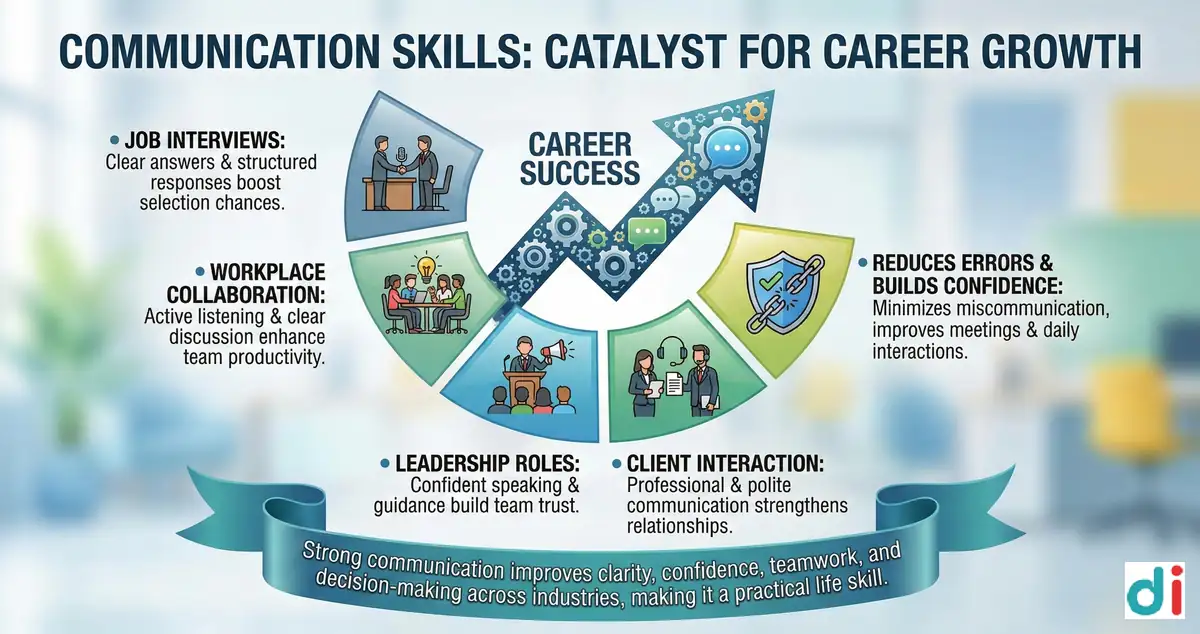
How do communication skills help in career growth is a question many students and professionals start asking once they realise that technical ability alone is not enough. In real workplaces, people are judged not only by what they know, but by how clearly they explain, listen, and respond. From interviews to daily teamwork, communication shapes trust, confidence, and professional image. At Creative English Learning Centre, a neighborhood English coaching institute in Garia, Kolkata, communication is treated as a practical career skill that grows through guided practice, not theory alone.
When individuals understand how communication influences opportunities, feedback, and leadership roles, they begin to see it as a foundation for long-term career progress rather than an optional add-on.
How do communication skills help in career growth at work
To understand how do communication skills help in career growth, look at everyday professional situations. Clear communication reduces confusion, improves coordination, and builds reliability. Employees who express ideas calmly and listen carefully are easier to trust and easier to work with. Strong communication helps professionals:- Explaining ideas and tasks clearly and confidently
- Participating actively and confidently in meetings
- Handling feedback calmly without creating conflict
- Collaborating smoothly and effectively within teams
How communication skills development supports career success
Communication improves gradually through consistent use. Communication skills development focuses on speaking with clarity, listening actively, and responding appropriately in different situations. These abilities are closely linked to career success, especially in roles that involve teamwork, presentations, or client interaction. At Creative English Learning Centre, learners practice real-life scenarios such as interviews, discussions, and workplace conversations. This practical exposure helps individuals express their ideas more confidently and reduces hesitation. As communication improves, professionals feel more prepared to take responsibility and contribute meaningfully at work.Why structured communication skills training matters
While self-practice helps, structured communication skills training provides direction and feedback that accelerate improvement. Training sessions highlight common mistakes, improve sentence flow, and build confidence through repetition and correction. This type of training supports:- Stronger and more confident interview responses
- Clear and structured explanations during presentations
- Professional interaction with colleagues and clients
- Greater confidence in leadership and decision-making situations