Storytelling for Social Change in South Kolkata: Turning Community Action into Lasting Impact
Original Community Research
During our community documentation work across Khanpur, Garia, Naktala, Netaji Nagar, and nearby areas of South Kolkata, we found that people remember real local stories far more than slogans or advertisements.One example is community-led health and food support initiatives. Rather than promoting an organization alone, the strongest communication highlights the people being served, the volunteers involved, and the measurable outcomes achieved.
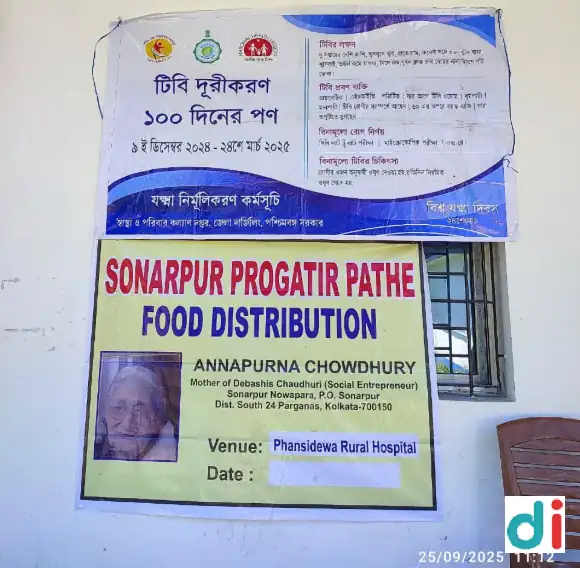
The photograph below documents a real community event where food distribution and public health awareness were promoted together.
Field Observation from Community Documentation
The uploaded photograph shows:- A Sonarpur Pragatir Pathe Food Distribution banner.
- Recognition of Annapurna Chowdhury, mother of entrepreneur Debashis Chowdhury.
- A venue identified as Phansidewa Rural Hospital.
- A government health awareness banner promoting 100 Days Vision Screening Programme.
Rather than telling people to care, the event itself becomes the story.
Community Interviews
As part of our documentation process in South Kolkata, we regularly ask community members similar questions.Volunteers
"People participate more when they understand why the programme matters instead of only seeing posters."Local Residents
"Seeing familiar faces involved gives us confidence to attend community programmes."Organizers
"Documenting every activity helps us explain our work to donors, local authorities, and future volunteers."These interviews consistently show that trust grows through authentic experiences rather than promotional language.
Real Case Study
Community Food Distribution with Public Health Awareness
A community organization planned a food distribution programme while a government vision screening campaign was taking place nearby.Instead of publishing only event announcements, the organizers documented:
- preparation activities
- volunteer coordination
- beneficiary interactions
- healthcare awareness
- photographs
- community participation
- event outcomes
Results
The documented story created:- stronger community trust
- improved volunteer engagement
- better transparency
- reusable documentation for annual reports
- higher credibility among supporters
What Our Community Research Shows
Based on documentation from multiple local social initiatives, we observe several recurring patterns.| Observation | Community Impact |
|---|---|
| Real photographs generate more trust than stock images | High |
| Stories featuring local volunteers receive stronger engagement | High |
| Progress updates encourage repeat participation | Medium to High |
| Combining health and welfare activities attracts wider audiences | High |
| Consistent documentation improves organizational credibility | High |
Common Challenges in Storytelling for Social Change
Many organizations struggle because they focus only on promotion. A lack of a cohesive content strategy often leads to common challenges including:- No documented beneficiary stories
- Lack of original photographs
- Generic website content
- Irregular communication
- Missing impact reports
- No measurable outcomes
- Volunteer activities not recorded
- Limited community participation
New Horizon Storytelling Framework
Our storytelling framework follows a structured process.Step 1 – Listen
Conduct community conversations before writing.Step 2 – Verify
Confirm names, dates, permissions, and facts.Step 3 – Document
Capture photographs, interviews, and observations.Step 4 – Write
Transform verified information into a clear narrative.Step 5 – Publish
Share stories across websites, reports, newsletters, and social media.Step 6 – Measure
Evaluate reach, engagement, volunteer participation, and community feedback to ensure measurable outcomes.Story Collection Template
Organizations can use the following template for every programme.| Section | Information to Record |
|---|---|
| Programme Name | |
| Community Location | |
| Date | |
| Social Issue Addressed | |
| Number of Participants | |
| Volunteers Involved | |
| Community Partners | |
| Activities Conducted | |
| Beneficiary Quotes | |
| Photographs Collected | |
| Lessons Learned | |
| Next Steps |
Free Download Checklist
Create a storytelling checklist for every community programme containing:- Event objective
- Community background
- Consent for photographs and interviews
- Volunteer list
- Activity timeline
- High-quality photographs
- Beneficiary stories
- Programme statistics
- Lessons learned
- Future recommendations