Writing newsletters for NGOs helps organizations communicate updates, success stories, and calls to action effectively. By crafting engaging nonprofit email content, NGOs like New Horizon in South Kolkata—covering Khanpur, Naktala, Netaji Nagar, Garia, and nearby areas—can strengthen community connections, improve donor trust, and enhance visibility for social development projects.
Effective newsletters are a powerful tool to engage supporters and drive action.
How do NGOs write effective newsletters?
NGOs write effective newsletters by focusing on concise, relevant, and engaging content. Newsletters should include updates on projects, success stories, upcoming events, and calls to action. Using clear headlines, readable formats, and appealing visuals ensures supporters stay informed and motivated to participate in social initiatives.
Writing Newsletters for NGOs
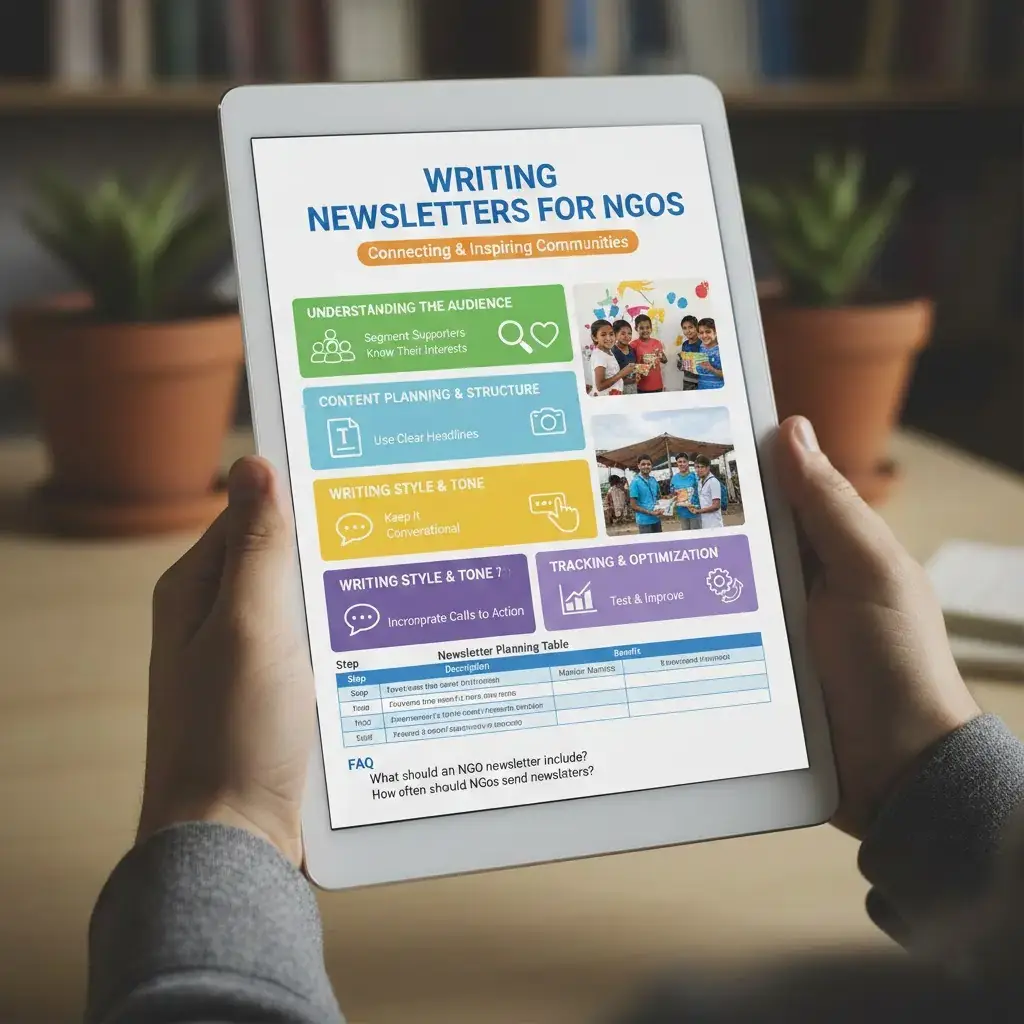
Understanding the Audience
Segmenting supporters is essential to deliver the right nonprofit email content to the right people. Donors, volunteers, and local community members may have different interests. Tailoring newsletters to each segment ensures relevance and increases engagement. Sharing local updates from South Kolkata, like Naktala or Garia, adds authenticity and resonates with nearby audiences.
Content Planning and Structure
Clear headlines help readers quickly understand newsletter sections. Stories about recent achievements, volunteer contributions, or community programs create emotional connections. Visuals such as images, charts, or infographics make newsletters more appealing. Calls to action, such as donations, volunteering, or event registration, guide supporters to contribute actively.
Writing Style and Tone
Use a friendly and approachable tone to maintain reader interest. Short sentences, active verbs, and conversational phrasing improve readability. Avoid jargon and complex language. Combining persuasive storytelling with factual updates helps communicate social impact effectively while keeping nonprofit email content informative and engaging.
Timing and Consistency
Sending newsletters regularly helps maintain visibility. Monthly or bi-monthly updates balance staying present without overwhelming readers. An editorial calendar can help schedule content, ensuring coverage of ongoing projects, fundraising campaigns, and local community initiatives.
Tracking and Optimization
Monitor open rates, click-through rates, and engagement metrics to evaluate newsletter success. Experiment with subject lines, layout, and visuals to see what resonates most. Optimizing based on data ensures each newsletter delivers maximum impact, fostering stronger connections with donors and volunteers.
Newsletter Planning Table
FAQ
What should an NGO newsletter include?
It should include updates on projects, success stories, events, donation appeals, and clear calls to action.
How often should NGOs send newsletters?
Monthly or bi-monthly newsletters are recommended to maintain visibility without overwhelming readers.
Do visuals improve engagement in newsletters?
Yes, visuals such as photos, charts, and infographics make content more appealing and increase reader interaction.
How can NGOs measure newsletter success?
By tracking open rates, click-through rates, and responses to calls to action, NGOs can evaluate engagement and impact.
Is audience segmentation important for nonprofit email content?
Absolutely. Segmentation ensures content is relevant, which boosts engagement and strengthens relationships with supporters.
How can local updates enhance newsletters?
Sharing local stories from areas like Khanpur, Naktala, or Garia builds authenticity and strengthens community connection.
What tone is best for NGO newsletters?
A friendly, clear, and conversational tone works best to keep readers interested and encourage participation.
Effective newsletters are a powerful tool to engage supporters and drive action.
How do NGOs write effective newsletters?
NGOs write effective newsletters by focusing on concise, relevant, and engaging content. Newsletters should include updates on projects, success stories, upcoming events, and calls to action. Using clear headlines, readable formats, and appealing visuals ensures supporters stay informed and motivated to participate in social initiatives.
Writing Newsletters for NGOs
- Writing newsletters for NGOs helps organizations keep supporters informed about projects, events, and impact, building stronger community engagement.
- Effective writing newsletters for NGOs ensures clear communication, attracts donors, and showcases the social impact of your initiatives.
- Mastering writing newsletters for NGOs allows nonprofits to share stories, updates, and calls to action in a professional and engaging way.
- Writing newsletters for NGOs is key to maintaining donor trust, increasing awareness, and highlighting your organization’s achievements consistently.
Understanding the Audience
Segmenting supporters is essential to deliver the right nonprofit email content to the right people. Donors, volunteers, and local community members may have different interests. Tailoring newsletters to each segment ensures relevance and increases engagement. Sharing local updates from South Kolkata, like Naktala or Garia, adds authenticity and resonates with nearby audiences.
Content Planning and Structure
Clear headlines help readers quickly understand newsletter sections. Stories about recent achievements, volunteer contributions, or community programs create emotional connections. Visuals such as images, charts, or infographics make newsletters more appealing. Calls to action, such as donations, volunteering, or event registration, guide supporters to contribute actively.
Writing Style and Tone
Use a friendly and approachable tone to maintain reader interest. Short sentences, active verbs, and conversational phrasing improve readability. Avoid jargon and complex language. Combining persuasive storytelling with factual updates helps communicate social impact effectively while keeping nonprofit email content informative and engaging.
Timing and Consistency
Sending newsletters regularly helps maintain visibility. Monthly or bi-monthly updates balance staying present without overwhelming readers. An editorial calendar can help schedule content, ensuring coverage of ongoing projects, fundraising campaigns, and local community initiatives.
Tracking and Optimization
Monitor open rates, click-through rates, and engagement metrics to evaluate newsletter success. Experiment with subject lines, layout, and visuals to see what resonates most. Optimizing based on data ensures each newsletter delivers maximum impact, fostering stronger connections with donors and volunteers.
Newsletter Planning Table
| Step | Description | Benefit |
|---|---|---|
| Audience Segmentation | Identify different supporter groups and tailor content | Higher engagement and relevance |
| Content Creation | Develop project stories, updates, and visuals | Stronger connection with supporters |
| Design & Layout | Use clear headings, images, and readable formats | Improved readability and scanability |
| Calls to Action | Include clear next steps like donations or volunteering | Increased participation and support |
| Tracking & Optimization | Analyze metrics and refine future newsletters | Better engagement and campaign effectiveness |
FAQ
What should an NGO newsletter include?
It should include updates on projects, success stories, events, donation appeals, and clear calls to action.
How often should NGOs send newsletters?
Monthly or bi-monthly newsletters are recommended to maintain visibility without overwhelming readers.
Do visuals improve engagement in newsletters?
Yes, visuals such as photos, charts, and infographics make content more appealing and increase reader interaction.
How can NGOs measure newsletter success?
By tracking open rates, click-through rates, and responses to calls to action, NGOs can evaluate engagement and impact.
Is audience segmentation important for nonprofit email content?
Absolutely. Segmentation ensures content is relevant, which boosts engagement and strengthens relationships with supporters.
How can local updates enhance newsletters?
Sharing local stories from areas like Khanpur, Naktala, or Garia builds authenticity and strengthens community connection.
What tone is best for NGO newsletters?
A friendly, clear, and conversational tone works best to keep readers interested and encourage participation.