
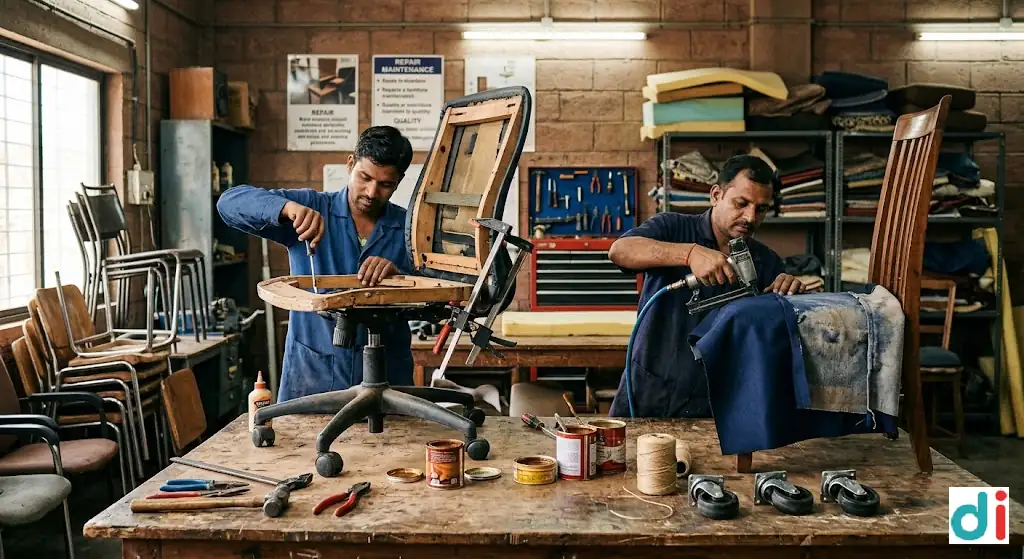
The chair repair process is a systematic approach to restoring damaged or worn-out chairs to their original strength and appearance. From inspecting the frame to tightening joints and replacing upholstery, following proper chair fixing steps ensures durability, comfort, and aesthetic appeal. This guide is tailored for furniture care in Ranjangaon MIDC.
Maintaining a sturdy, comfortable chair requires understanding the proper repair methods and executing each step carefully.
It depends on damage type. Minor repairs take 30–60 minutes, while full frame and upholstery work may take 4–6 hours.
Q2: Can all chairs be repaired?
Most wooden and metal chairs can be repaired. Severely damaged or decayed chairs may require replacement.
Q3: Are chair fixing steps difficult to do at home?
Simple repairs like tightening screws or minor upholstery work can be done at home, but structural repairs may need professional tools and expertise.
Q4: How often should chairs be maintained?
Regular maintenance every 6–12 months helps prevent major damage and extends chair life.
Q5: Where can I find professional chair repair services in Ranjangaon?
Professional services like chair repair process providers in Ranjangaon MIDC offer both on-site and workshop repairs.
Q6: Is it cheaper to repair or replace a chair?
Repairing is usually more cost-effective, especially for high-quality chairs. Replacement is considered when damage is extensive.
Maintaining a sturdy, comfortable chair requires understanding the proper repair methods and executing each step carefully.
What is chair repair process?
The chair repair process is the methodical approach of examining, repairing, and restoring chairs to full functionality. It involves assessing structural damage, fixing broken parts, reinforcing joints, replacing cushions or upholstery, and finishing with polish or paint. Using correct tools and techniques ensures long-lasting results and safe usage.Step-by-Step Chair Repair Process
- Inspection and Assessment – Begin by closely examining the chair for broken legs, loose joints, cracked frames, or torn upholstery. Identify which parts need replacement or reinforcement.
- Disassembly of Parts – Remove cushions, upholstery, or detachable components carefully. This step ensures that repair or refinishing can be done without causing further damage.
- Frame Repair and Reinforcement – Fix cracked wooden or metal frames using adhesives, screws, or brackets. Reinforce weak joints with glue or additional hardware to ensure stability.
- Chair Fixing Steps for Legs and Arms – Tighten wobbly legs or armrests using screws, bolts, or brackets. For broken legs, replace them with matching parts or repair using wood fillers and clamps.
- Upholstery Replacement or Repair – Replace worn-out fabric or cushions. Stretch fabric tightly over the frame, staple or glue securely, and ensure padding is evenly distributed.
- Sanding, Polishing, and Finishing – Smooth rough edges, sand frames, and apply varnish or polish. This enhances the appearance and protects the chair from future damage.
- Reassembly and Testing – Reattach all parts carefully, test for stability, and make any final adjustments. The chair should now be safe, comfortable, and visually appealing.
Types of Chair Repairs
Minor Repairs
Small scratches, loose screws, minor wobbles, or superficial fabric tears can be fixed quickly using adhesives, touch-up pens, or staples. These repairs are cost-effective and maintain chair lifespan.Major Repairs
Cracked frames, broken legs, or completely torn upholstery require professional attention. Replacing or reinforcing structural components ensures durability and restores original comfort.Chair Repair Table
| Repair Type | Estimated Time | Materials Needed | Benefits | Cost Range (INR) |
|---|---|---|---|---|
| Minor Fixes | 30–60 mins | Screws, glue, touch-up | Quick, cost-effective | 200–500 |
| Leg & Frame Repair | 1–3 hours | Wood filler, clamps | Strong, stable, long-lasting | 500–1500 |
| Upholstery Replace | 2–4 hours | Fabric, padding, staples | Comfortable, aesthetic restoration | 800–2500 |
| Complete Overhaul | 4–6 hours | All materials | Like-new chair, durable | 2000–4000 |
Common Chair Fixing Steps Explained
- Tighten Loose Screws and Joints – Identify wobbly areas and secure screws or bolts to eliminate instability.
- Replace Broken Components – Swap out damaged legs, arms, or crossbars with matching parts for uniformity.
- Refinish Surfaces – Smooth rough edges, apply polish or paint to restore appearance.
- Upholstery Care – Replace cushions, patch fabric tears, and ensure comfort.
- Final Testing – Sit, rock, and test weight support to guarantee safety and stability.
FAQ
Q1: How long does a typical chair repair process take?It depends on damage type. Minor repairs take 30–60 minutes, while full frame and upholstery work may take 4–6 hours.
Q2: Can all chairs be repaired?
Most wooden and metal chairs can be repaired. Severely damaged or decayed chairs may require replacement.
Q3: Are chair fixing steps difficult to do at home?
Simple repairs like tightening screws or minor upholstery work can be done at home, but structural repairs may need professional tools and expertise.
Q4: How often should chairs be maintained?
Regular maintenance every 6–12 months helps prevent major damage and extends chair life.
Q5: Where can I find professional chair repair services in Ranjangaon?
Professional services like chair repair process providers in Ranjangaon MIDC offer both on-site and workshop repairs.
Q6: Is it cheaper to repair or replace a chair?
Repairing is usually more cost-effective, especially for high-quality chairs. Replacement is considered when damage is extensive.