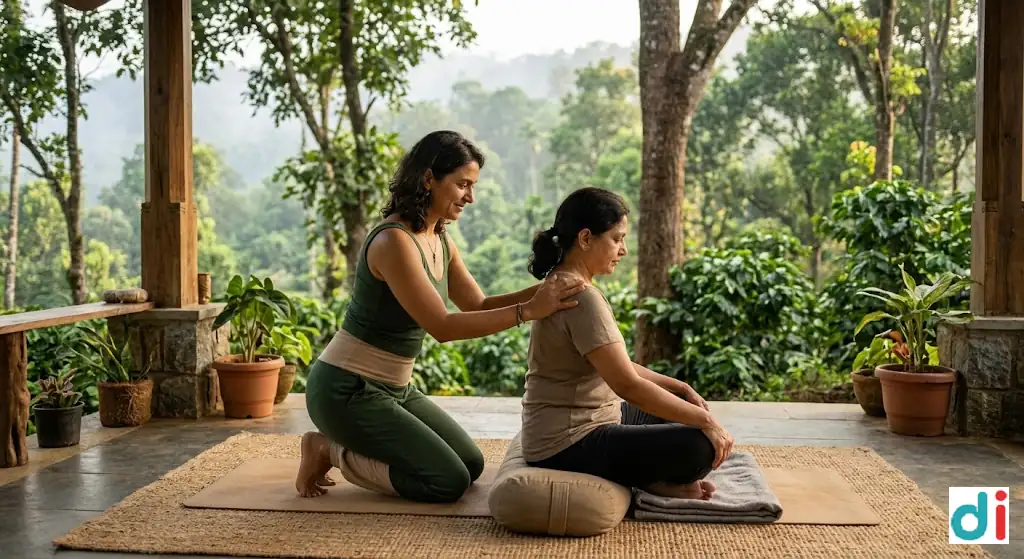
Therapeutic yoga sessions in Murnad Kodagu offer personalized healing through mindful movement, breathwork, and relaxation. These sessions support stress relief, pain management, and chronic conditions. Therapy-yoga blends traditional practices with modern wellness needs, helping individuals restore balance, improve mobility, and experience long-term physical and emotional well-being.
A deeper look reveals how focused, guided yoga can gently transform everyday health challenges into manageable, sustainable wellness routines.
What is therapeutic yoga used for?
Therapeutic yoga is used to support healing in the body and mind. It helps manage stress, chronic pain, lifestyle diseases, and emotional imbalance. By combining gentle postures, breathing techniques, and relaxation, it improves flexibility, reduces tension, and promotes natural recovery without aggressive physical strain.
Therapeutic Yoga Sessions Murnad Kodagu – A Personalized Healing Approach
At the heart of wellness in Kodagu, therapeutic yoga sessions murnad kodagu are designed to go beyond general fitness routines. These sessions focus on individual needs. Each body responds differently to stress, injury, or illness. That’s where therapy-yoga stands apart. Instead of pushing limits, it listens. Instead of forcing poses, it adapts. The calm surroundings of Murnad naturally enhance the healing process, making every session feel grounded and restorative. Whether dealing with back pain, anxiety, or fatigue, the approach remains steady—slow, intentional, and deeply supportive.
Why Therapy-Yoga is Gaining Attention in Kodagu
1) Real Needs, Real Solutions with Therapy-Yoga
Therapy-yoga responds to modern health challenges. Sedentary lifestyles, screen fatigue, and mental overload are common concerns. In Murnad Kodagu, these sessions are structured to directly address such issues through posture correction, breathing awareness, and guided relaxation, creating a noticeable shift in daily energy levels.
2) Natural Healing Without Pressure
Unlike intense workouts, therapy-yoga respects limitations. It supports healing after injuries, improves joint mobility, and reduces stiffness. The emphasis is not on performance but on progress, however small it may seem.
Core Benefits of Therapeutic Yoga Sessions Murnad Kodagu
The impact of therapeutic yoga sessions murnad kodagu becomes visible when consistency meets the right guidance. Over time, the body softens, the breath deepens, and the mind slows down. Pain areas receive attention without strain. Stress begins to dissolve gradually, not abruptly. Therapy-yoga works quietly but effectively, helping people regain control over their physical and emotional health. It supports conditions like hypertension, diabetes, anxiety, and muscular imbalances. More importantly, it builds awareness. That awareness becomes the foundation for long-term well-being.
Key Elements Included in Therapy-Yoga Sessions
| Element |
Purpose |
Outcome |
| Gentle Yoga Postures |
Improve flexibility and reduce stiffness |
Better mobility and pain relief |
| Breathing Techniques |
Calm the nervous system |
Reduced stress and anxiety |
| Guided Relaxation |
Deep mental and physical rest |
Improved sleep and clarity |
| Postural Alignment Work |
Correct body imbalances |
Reduced strain and injury prevention |
| Mindfulness Practices |
Increase awareness and focus |
Emotional balance and calmness |
Who Can Benefit from Therapy Yoga?
1) Individuals with Chronic Conditions
People dealing with long-term health issues often find relief through therapy-yoga. It supports gradual recovery without overwhelming the body.
2) Anyone Seeking Mental Calm
Stress is not always visible, but its effects are real. Therapy-yoga helps release mental tension and restore emotional balance.
How Therapeutic Yoga Sessions Work in Murnad Kodagu
The structure of therapeutic yoga sessions murnad kodagu is simple yet deeply effective. Sessions begin with observation. Understanding posture, breathing patterns, and physical limitations sets the foundation. Then comes gentle movement, slow and controlled. Breathing exercises follow, bringing awareness inward. The session ends with relaxation, allowing the body to absorb the benefits. Over time, small changes become noticeable. Movements feel easier. The mind feels lighter. The body starts responding with less resistance and more ease.
Therapy-Yoga vs Regular Yoga – What’s the Difference?
| Aspect |
Therapy-Yoga |
Regular Yoga |
| Focus |
Healing and recovery |
General fitness and flexibility |
| Intensity |
Low to moderate |
Moderate to high |
| Approach |
Personalized |
Group-based or standard |
| Goal |
Pain relief and health improvement |
Strength and flexibility |
| Suitability |
All ages, including medical conditions |
Generally healthy individuals |
Why Choose Therapeutic Yoga Sessions Murnad Kodagu?
Choosing therapeutic yoga sessions murnad kodagu means choosing a mindful path toward wellness. The environment of Kodagu naturally supports healing. Fresh air, calm surroundings, and a slower pace of life complement the practice. Combined with therapy-yoga techniques, this creates a powerful space for recovery and growth. These sessions are not rushed. They evolve with the individual. Every stretch, every breath, and every pause has a purpose. Over time, this builds resilience, not just physically but mentally as well.
FAQs on Therapy-Yoga
1) What is therapy yoga and how is it different?
Therapy-yoga focuses on healing specific health issues, while regular yoga is more general and fitness-oriented.
2) Can beginners join therapeutic yoga sessions?
Yes, therapy-yoga is ideal for beginners as it starts gently and adapts to individual needs.
3) How often should therapy yoga be practiced?
2–4 sessions per week can bring noticeable results, depending on the condition and consistency.
4) Is therapy yoga safe for chronic pain?
Yes, it is designed specifically to manage and reduce chronic pain safely.
5) How long before results are visible?
Some benefits like relaxation are immediate, while physical improvements may take a few weeks.
6) Does therapy yoga help with stress and anxiety?
Yes, breathing and relaxation techniques are highly effective for calming the mind.