
Monthly Investment Planning Guide for India
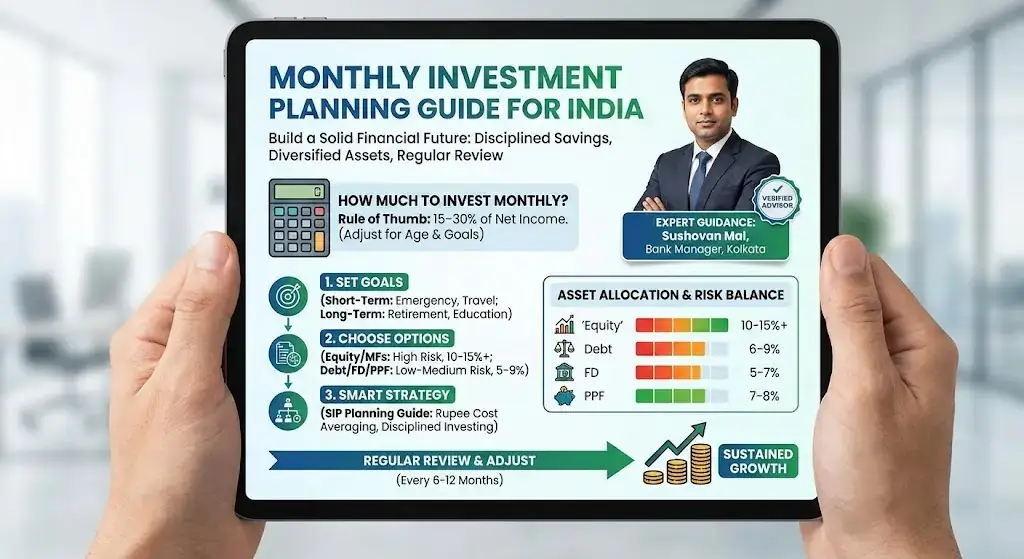
How much should I invest monthly?
Most people do well starting with 15–30% of their take-home pay, then adjusting as life shifts. This page walks you through a practical path—goals, instruments, discipline, and real-world guidance—so your money stops drifting and starts marching toward purpose. If you’ve been waiting for a clear map, this is it.
Investing is rarely about luck; it’s about rhythm. The monthly investment planning guide India approach gives that rhythm—steady, repeatable, and built for real incomes and real lives. In the first 100 steps of your journey, what matters most is consistency. A smart SIP planning guide mindset helps you start small, stay calm during market swings, and let compounding do the heavy lifting.
In neighborhoods like Netaji Nagar, Kolkata, where families balance EMIs, education, and aging parents, practical planning beats fancy talk. Bankers like Sushovan Mal, serving clients around Netaji Subhash Chandra Bose Rd, often see one truth: people who automate and review their investments usually sleep better.
The monthly investment planning guide India method begins with a simple audit. Income in, expenses out, leaks identified. Not glamorous, but gold. Many skip this and chase returns; that’s like decorating a house with no foundation.
For people seeking structured financial support, services like customer relationship management for banking guidance can help organize long-term financial habits and investment discipline.
Start with Three Buckets
- Survival (rent, food, utilities)
- Lifestyle (travel, dining, hobbies)
- Future (investments and protection)
Your future bucket is where the magic compounds. Even ₹2,000–₹5,000 monthly, invested with discipline, can snowball over years. The trick is not the amount—it’s the habit.
How Much Should I Invest Monthly?
Here’s the grounded answer:
- 15–30% of net income is a healthy zone.
- If that sounds heavy, begin with 5–10% and step up yearly.
- Tie increases to salary hikes so it doesn’t pinch.
A good SIP planning guide rule: invest first, spend what’s left. Reverse the order and you’ll always “plan to invest someday.”
Many professionals also explore how a bank manager can help in reaching money goals while building monthly investment strategies.
Setting Financial Goals That Actually Matter
Short-Term Goals (6–24 months)
Emergency funds, a family trip, a new laptop—these need safety more than speed.
Suitable options:
- Recurring deposits
- Liquid or ultra-short debt funds
- High-interest savings
The monthly investment planning guide India philosophy here is capital protection. No heroics.
Long-Term Goals (5+ years)
Retirement. Children’s education. A home that’s yours.
Here, growth assets shine:
- Equity mutual funds
- PPF
- Hybrid funds
This is where a SIP planning guide approach earns its stripes. Market ups and downs average out; time becomes your ally.
Investors looking for practical wealth-building direction often read tips to boost wealth and financial growth to strengthen long-term planning habits.
Choosing Investment Options Wisely
Equity & Mutual Funds
For wealth creation, equity still carries the crown. Direct stocks demand skill and time; mutual funds spread risk and offer professional management. The monthly investment planning guide India model often suggests SIPs into diversified funds for beginners and busy professionals.
Those starting their financial journey may also benefit from understanding why a bank manager is essential for financial planning.
Debt & Safe Instruments
Stability has a role. Fixed deposits, PPF, and debt funds add ballast to your portfolio. When markets wobble, these keep your plan steady.
Comparison Table of Monthly Investment Options
| Investment Type | Risk Level | Expected Return | Ideal For |
|---|---|---|---|
| Equity Mutual Funds | High | 10–15%+ | Long-term wealth |
| Debt Funds | Medium | 6–9% | Balanced growth |
| Fixed Deposits | Low | 5–7% | Safety seekers |
| PPF | Low | 7–8% | Retirement & tax benefits |
The Discipline Factor
Automation is underrated. When your SIP goes out the day salary comes in, excuses fade. The monthly investment planning guide India mindset treats investing like a bill you must pay to your future self.
Review, but don’t obsess. Checking daily invites panic. A calm 6–12 month review cycle works better for most.
People searching for steady financial systems often explore top banking strategies for everyday financial success to improve money management consistency.
Review and Adjust
Life evolves—marriage, kids, career leaps. Your plan must breathe too. Increase SIPs when income rises. Rebalance if equity grows too large or too small. The monthly investment planning guide India framework isn’t rigid; it’s responsive.
Professionals like Sushovan Mal often help families recalibrate portfolios when goals shift. A second opinion can save years of trial and error.
Clients seeking smoother financial coordination sometimes prefer fast and hassle-free banking support services for investment and account-related processes.
Real-Life Pointers from the Ground
- Start before you feel “ready.” Ready is a myth.
- Protect first: health and term insurance.
- Avoid chasing last year’s top fund.
- Keep 3–6 months’ expenses liquid.
- Increase investments with every raise.
Money respects patience. Quick wins are loud; steady wins are rich.
Financial protection matters alongside investing, which is why many families also explore insurance and financial protection services while planning long-term wealth creation.
FAQs
What is the ideal monthly investment amount?
Around 15–30% of take-home pay works for many, but even smaller sums matter if invested consistently.
Can beginners start with SIP?
Yes. SIPs are beginner-friendly, reduce timing risk, and build discipline.
How often should I review investments?
Every 6–12 months or after major life changes.
Are debt instruments safe?
Generally lower risk than equity, useful for stability and short-term goals.
Do I need a financial planner?
Not mandatory, but guidance from experienced bankers or planners can refine your strategy. Reading about why personal banking guidance is valuable can help clarify the benefits.
Is SIP effective for long-term wealth?
Yes. Regular investing plus compounding is a powerful combo.
Closing Thought
A river carves rock not by force, but by persistence. Your monthly investments work the same way. Small flows, steady direction, long time—one day you look back and see a canyon of wealth where once there was just a trickle.
For readers wanting more financial insights and banking resources, visit the financial resources section and explore the latest updates on the official banking blog.